Australian retail is more competitive than it has ever been. Consumers are simultaneously more distracted and more discerning — they have access to every global brand, they comparison shop in seconds, and they make purchasing decisions based on brand impressions formed before a single product is evaluated. In this environment, a brand strategy is not a luxury reserved for big retailers. It is the infrastructure every retail business — from independent boutiques to fast-growing eCommerce operations — needs to compete.
This guide covers what retail brand strategy actually means in 2026, how it applies to both physical and online retail, and what the strongest Australian retail brands are doing that most others are not.
1. Why Retail Brand Strategy Is No Longer Optional
For much of retail’s history, brand strategy was something you did once — you named the business, designed a logo, picked some colours, and got on with selling. That era is over.
Today, Australian consumers encounter your brand across a dozen touchpoints before they make a purchase decision: your Instagram grid, your Google My Business profile, your website, a friend’s recommendation, a product photo on Pinterest, an unboxing video on TikTok. Each of these moments forms an impression. If those impressions are inconsistent, forgettable, or fail to communicate your point of difference, you lose ground to competitors who have thought more carefully about how they show up.
Brand strategy is the framework that makes all of those touchpoints coherent and intentional. It answers the questions your marketing can never fully answer on its own: Who are we? Who are we for? Why should anyone care?
“Australian consumers don’t buy products — they buy brands they feel something about. Strategy is what makes that feeling consistent and repeatable.”
The retailers who are thriving in Australia right now are not necessarily selling better products. They are communicating better, telling better stories, and building experiences — physical and digital — that people want to return to.
2. What Australian Retail Customers Actually Respond To
Understanding Australian consumer behaviour is essential to building a retail brand that resonates. Several themes have emerged consistently across the market:
- Authenticity over aspiration. Australian consumers have a well-documented sensitivity to brands that feel manufactured or try too hard. Local character, genuine story, and honest communication consistently outperform polished global-style marketing in the Australian domestic market.
- Value clarity, not just price. Price sensitivity is real, but Australians will pay more when the value proposition is clear and the brand experience justifies it. The brands that compete purely on price tend to erode their own margins and customer loyalty simultaneously.
- Sustainability signals matter. Environmental and ethical positioning has moved from niche to mainstream. This does not mean every brand needs to be a sustainability brand — but consumers notice when packaging, sourcing, or business practices feel careless.
- Local connection builds loyalty. Supporting Australian-made, sourcing locally, or being rooted in a specific community are powerful brand signals in the domestic market. They are also difficult for international competitors to replicate.
3. The Difference Between a Brand and a Logo
This distinction matters enormously in retail, and it is the most common source of confusion when business owners think about brand investment.
A logo is a mark. It is a symbol that identifies your business visually. A logo is important — but it is only one expression of your brand, not the brand itself.
A brand is the total impression your business makes on the people who encounter it. It includes your visual identity (logo, colour palette, typography, photography style), your voice (the way you write, speak, and present yourself), your values (what you stand for and what you will not compromise on), your customer experience (how it feels to buy from you, receive your product, interact with your team), and your promise (what customers can consistently expect from you).
When retailers say “we need to rebrand,” they often mean “we need a new logo.” But a new logo attached to an unclear positioning, inconsistent experience, and muddled messaging will not move the needle. The logo is the final expression of a brand strategy — not a replacement for one.
4. How to Define Your Retail Brand Positioning
Brand positioning is the space your brand occupies in your customer’s mind, relative to your competitors. It is the answer to the question: why should someone choose you over everyone else available to them?
Strong positioning is specific. “Quality products at fair prices” is not positioning — it is a baseline expectation. Effective positioning names a specific audience, makes a specific claim, and delivers a specific experience that reinforces that claim consistently.
A practical process for defining positioning involves three steps:
- Audience clarity. Who is your best customer — not your average customer, but the person whose needs you serve better than anyone else? Get specific about their values, their aesthetic preferences, their price sensitivity, and what they are really buying when they buy from you.
- Competitive mapping. Look honestly at your five closest competitors. Where do they position? What are they claiming? What are they not saying? The gaps in that map are where your opportunity lives.
- Owned territory. What is the specific ground you can credibly claim and consistently deliver on? This becomes the foundation of your positioning statement — and every piece of brand communication you create.
“Positioning is not about being everything to everyone. The most successful retail brands are very clear about who they are not for — and that clarity is what makes them magnetic to the people they are for.”
5. Brand Strategy for eCommerce: What Changes Online
eCommerce has democratised retail — any business can now sell to the entire country from day one. But it has also raised the stakes on brand strategy, because online, customers make purchase decisions in seconds with less sensory information than a physical store provides.
In a physical retail environment, the smell of the store, the feel of the product, the greeting from staff, the music playing — all of these things communicate brand. Online, you have a screen. That means your visual design, your copywriting, your photography, your product descriptions, your checkout experience, and your post-purchase communication have to do extraordinary work.
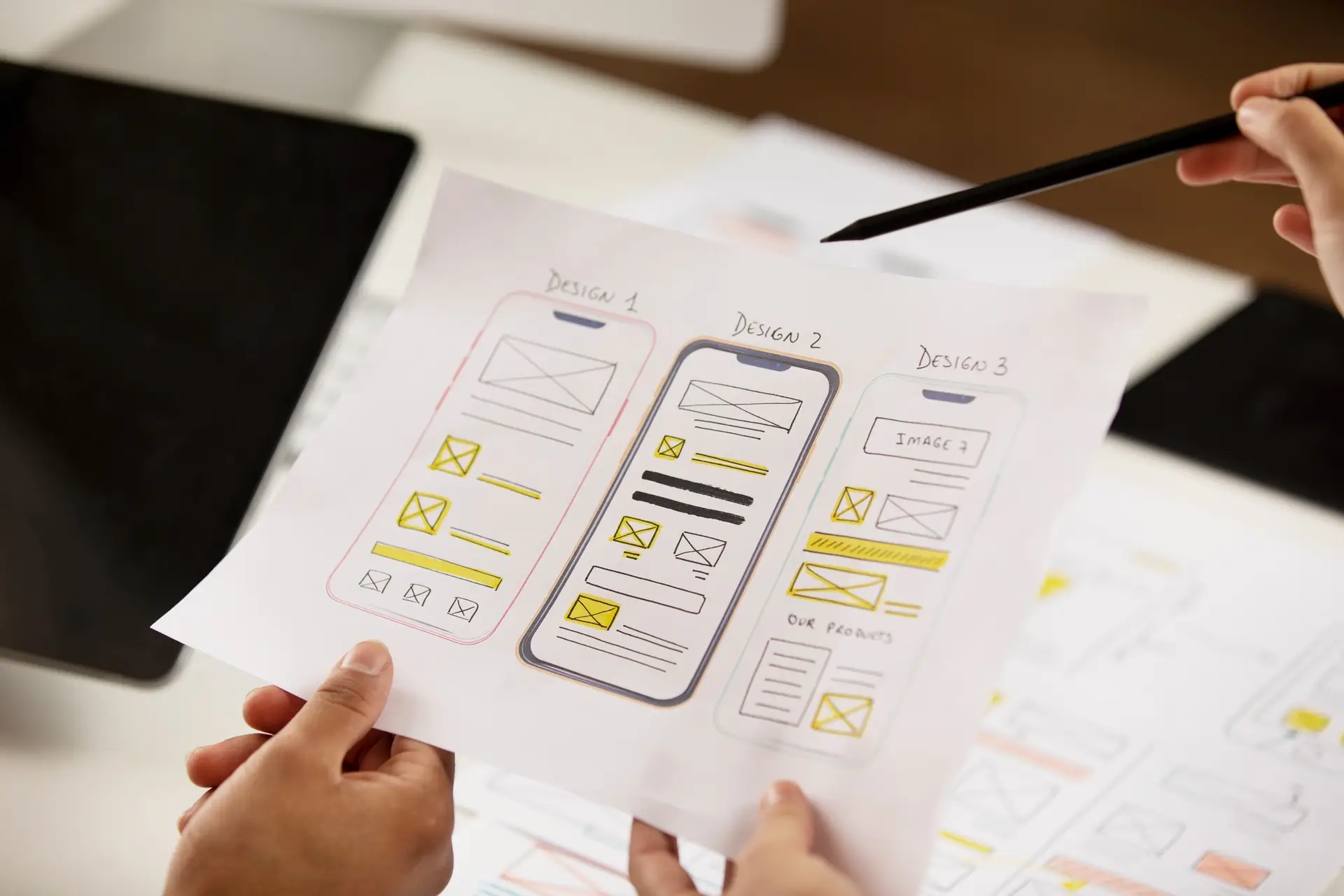
- Visual hierarchy and UX. How does a customer navigate from landing page to product to purchase? Every friction point in that journey costs conversions. Great eCommerce brands invest in UX design that feels effortless.
- Product photography as brand communication. On a screen, your imagery is your product. The way you photograph and style your products communicates brand values before a customer reads a single word.
- Copy that converts. Product descriptions, category headlines, and even micro-copy (button labels, error messages, confirmation emails) are all brand touchpoints. The brands that treat copy as an afterthought are leaving significant revenue on the table.
- Post-purchase experience. The experience does not end at checkout. Order confirmation emails, shipping notifications, packaging design, and returns processes are all brand-building moments — or brand-damaging ones.
6. When to Rebrand Your Retail Business
Rebranding is one of the most significant investments a retail business can make — and also one of the most misunderstood. Done well, a rebrand can reposition a business for a new market, attract a different customer segment, or signal a meaningful change in the business’s direction. Done poorly, it can confuse loyal customers and waste significant resources.
- Your visual identity is more than five years old and no longer reflects the quality or positioning of the business
- You are entering a new market segment or targeting a meaningfully different customer
- Your competitors have elevated their brand and you are losing ground on perception
- You have significantly changed your product offer or business model
- Your team no longer feels proud to share your brand materials
A rebrand does not always mean changing your name or throwing out your existing visual identity. Sometimes the most effective rebrand is an evolution — refining what already exists rather than starting from scratch. The distinction between a refresh and a full rebrand should be determined by a strategic audit, not by how bored you are with your current look.
7. How Design and Digital Experience Work Together
The most effective retail brands in Australia treat design and digital experience as inseparable. Your website is not a brochure — it is your primary retail environment for a growing percentage of your customers. The quality of that environment directly affects how much people trust you, how long they stay, and whether they buy.
Design decisions that seem aesthetic — font choice, whitespace, colour palette, button size — are actually conversion decisions. Research consistently shows that users form judgements about a website’s credibility within 50 milliseconds of loading it. That initial impression is entirely design-driven.
This is the lesson that Mazzucchelli’s learned when The Animals built their eCommerce store in 2020 — a business with 117 years of offline retail history that needed to translate its brand authority into a digital environment. The result was a profitable store built in six weeks, later redesigned and upgraded as the brand evolved. The key was not just building a functional store — it was ensuring the digital experience reflected the brand’s premium positioning at every point.
8. What to Expect When Working With a Creative Agency
If you are considering working with a creative agency on your retail brand strategy, understanding the process will help you get more from the engagement.
A brand strategy engagement typically begins with discovery — a structured process of interviews, audits, and research designed to surface insights about your business, your customers, and your competitors. This phase often surfaces things that surprise even founders who have been building their business for years.
Strategy comes next — a clear articulation of your positioning, your target audience, your brand personality, and the principles that should guide every future communication decision. This is the document that makes everything else faster and more consistent.
Visual identity follows strategy, not the other way around. The best creative work is always rooted in a clear strategic brief. When you brief a designer without a strategy, you are asking them to make strategic decisions with aesthetic tools — which is why so many logos and visual identities feel arbitrary when you look at them.
Finally, a strong agency partner will deliver not just the work but the systems to maintain it — brand guidelines, design assets, tone of voice documentation, and often ongoing support as the brand is applied across new channels and campaigns.
If your retail or eCommerce brand is not converting the way it should, the problem is rarely the product — it is usually the brand experience surrounding it. The Animals is a brand design and digital experience studio based in St Kilda, Melbourne. We build retail brands and eCommerce experiences that turn browsers into buyers and buyers into advocates. Talk to The Animals about your brand →